




Audio By Vocalize

They say a picture is worth a thousand words.
And for culture enthusiasts and Malindi residents, the recent find of a picture believed to be of a legendary woman who shook an entire colonial empire has stirred anxiety.
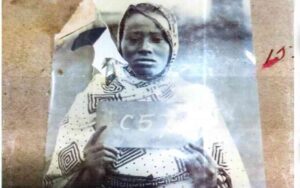
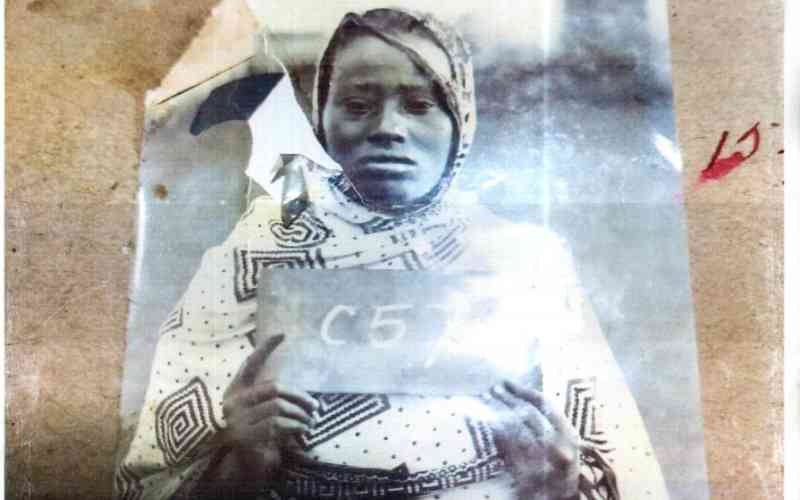
As Kenya prepares for the Madaraka Day celebrations in Wajir, officials of the Malindi District Cultural Association are excited about the black and white photograph believed to be that of the revered Giriama warrior Mekatilili wa Menza.
Mekatilili’s heroism has been celebrated for decades not just in her community but nationally.
The association secretary, Joseph Mwarandu, believes the photo is a breakthrough in their many years of seeking to get her “true image”.
“Our many years of searching for his photograph are a success. We now have her photo that was taken while she was detained in Kisii prison,” says the lawyer and a Kaya elder.
In the many stories written about the heroine, illustrations have been used to bring to life the legend.
The group worked with a team of experts who built the Uhuru Gardens people’s museum in Nairobi to trace the photo.
“There was a lot of research during the establishment of the Uhuru Gardens museum before the engraved scripture of Mekatilili wa Menza was put on the left side of the main entrance facing that of Field Marshal Dedan Kimathi. We worked closely with that team, and they finally helped us get the photo of Mekatilili wa Menza,” explains the assistant secretary and researcher, Stan Kiraga.
He says they had earlier tried to get records about Mekatilili at the Kisii prison in vain after they were turned away.
According to Kiraga, the authenticity of the photo has already been proved after comparing it with the physical looks of Mekatilili’s granddaughter, Sayo, who lived near Malindi and died in recently.
“The photo is old, but we have no doubt it is that of Mekatilili, and we are planning to upgrade our library and preserve it for posterity,” he says.
He believes the picture was retrieved from the University of Cambridge library and not Kisii as many records were transferred to the UK during the colonial era.
Stay informed. Subscribe to our newsletter
In the photo, the warrior is dressed in a kikoi and a traditional Giriama skirt known as hando.
Several years back, Malindi District Cultural Association discovered Mekatilili’s grave in Bungale village within the Dakatcha woodland in Magarini, near the Shakahola Shopping Centre, where she kicked off the Giriama uprising on August 13, 1913.
According to Kiraga, his team has since identified the spot where the heroine reportedly slapped a Malindi colonial assistant district commissioner, Arthur Champion, sparking the war.
The group, which works closely with the Mijikenda Kaya elders and the Mau Mau Veterans Association, has since bought three-quarter-of-an-acre land and erected a pillar. They intend to put up a monument.
On July 25, 2022, Peter Wasilwa, who was the Uhuru Gardens project consultant, briefed President Uhuru Kenyatta on his team’s extensive search for information on Mekatilili and Kimathi.
“We went to Bamba, Bungale, Kilifi, Kisii and Mumias and finally we brought the soul and spirit of Mekatilili wa Menza to Uhuru Gardens for posterity,” said Wasilwa in a video.
Coast region women, particularly those in politics, love associating themselves with Mekatilili to show bravery and readiness to defend the interests of residents.
Mekatilili’s resistance against forced labour, land seizure and taxation by the British lasted up to 1914.
Colonial administrators like Champion and CW Hobley sought to integrate the Giriama into the colonial system. The administration also imposed taxes such as hut tax, restrictive measures, interfered with Giriama trade and tried to conscript young men for forced labour in sisal and rubber plantations or as soldiers or porters in the army.
The British also attempted to reshape local governance by appointing headmen and local councils in 1913. But locals felt they were bypassing the traditional elders who had for long governed the Giriama society.
Locally known as Kondo ya Chembe or war against Champion, the resistance resulted in Mekatilili’s arrest and imprisonment in Kisii. She escaped prison while the colonial administration led a brutal suppression of her community.
Mekatilili was born Mnyazi wa Menza in Mtsara wa Tsatsu in the present Ganze Sub-County in the 1860s. She was married to Mulewa wa Duka but was widowed at an early age before she mobilised her people through traditional dance known as Kifudu to engage the colonial regime.
Oral history says her early years were marked by trouble as one of her brothers, Ngumbao, was kidnapped by Arab slave traders in the 1880s, leading to trauma.
The incident was linked to a famous Giriama prophecy by a heroine named Mepoho, who foretold the coming of strangers with hair like sisal. This is believed to have fuelled her resolve to fight the British rule.
The flashpoint came on August 13, 1913, when Mekatilili attended a baraza called by Champion at Chakama to quell dissent and force the community to provide young men during World War 1.
According to oral lore, she challenged Champion in front of the crowd to catch a chick and get the wrath of its mother. As a demonstration, she brought a live hen and her chicks and dared Champion to catch one of the chicks, which he reportedly did.
Some accounts say that Champion was pecked by the furious hen on his hand when he reached out to a chick, while other narratives state that Mekatilili seized the moment and slapped Champion across the face when he grabbed the chick.
Several accounts indicate that Champion and his officers then opened fire on the unarmed crowd, killing several men and women, sparking the war.
In response, the colonial administration burned villages, seized livestock and food stores, and even razed sacred Kaya Fungo Forest.
Mekatilili and her close ally Wanje wa Mwadorikola were captured on October 17, 1913, and sentenced to five years of exile in Kisii, more than 700 kilometres away, for sedition and resisting the colonial rule.
Oral history says that on January 14, 1914, or after spending just about six months in prison, the pair broke free and trekked across Kenya back to the Coast in the middle of World War 1.
But just days after Mekatilili’s return, she was rearrested and taken to prison in Kismayu, Somalia. Her second exile coincided with the end of the Giriama resistance.
Mekatilili was allowed to return home a heroine in 1919.
After five years in exile, Mekatilili came back a hero among her people and assumed her role in community leadership in the women’s council at Kaya Fungo while Mwadorikola served in the men’s council.
Various reports indicate that Mekatilili died of natural causes in 1924 while pounding grain in a field. She was buried in Bungale in the hinterland of Malindi.
Her death did not receive any attention from the colonial regime but residents remembered her grave site and together with Madca officials and other researchers, located it.