


Audio By Vocalize

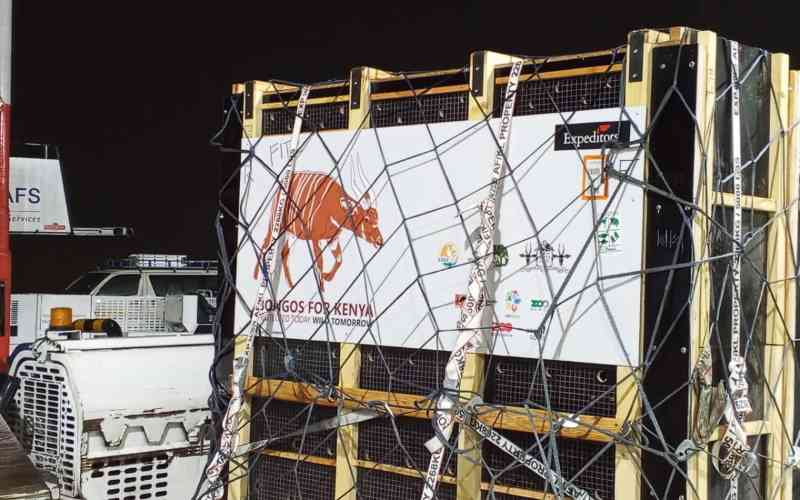
Four critically endangered mountain bongos touched down at Jomo Kenyatta International Airport on Tuesday, marking a significant step in Kenya’s efforts to rescue one of the world’s rarest antelopes from extinction.
The four males, repatriated from the Czech Republic, are part of a long-term, science-driven conservation strategy aimed at restoring the fragile population of the species, which exists only in Kenya’s montane forests.
Their arrival, witnessed by senior government officials including Prime Cabinet Secretary Musalia Mudavadi and Tourism Cabinet Secretary Rebecca Miano, signals more than a routine wildlife transfer—it is a deliberate intervention to reverse decades of decline.
Speaking during the reception, Miano described the animals as “a truly prized heritage,” noting that their relocation underscores the importance of coordinated conservation efforts.
“Wildlife conservation calls for partnerships that bring together government, communities and private sector players,” she said.
“More than 70 per cent of Kenya’s tourism attractions are wildlife-driven, yet over 65 per cent of wildlife exists outside protected areas. Collaboration is therefore essential.”
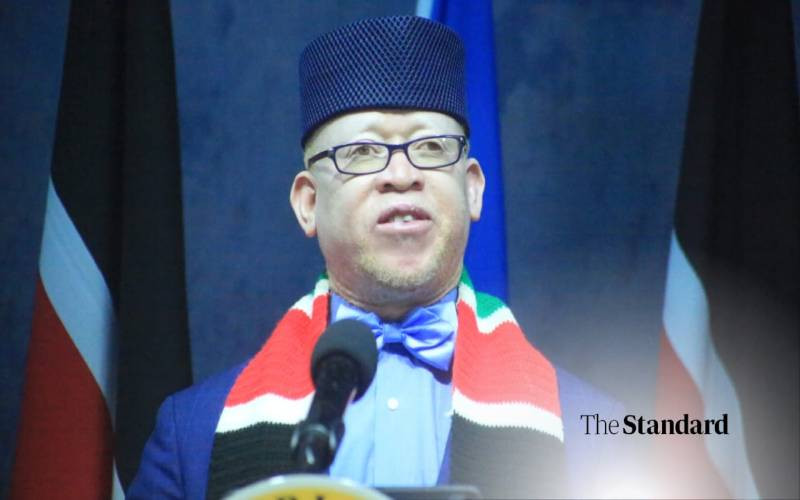
Speaking at JKIA, Mudavadi reaffirmed Kenya’s commitment to conservation through policy and action.
“Today’s milestone, anchored in science, collaboration, and long-term planning, demonstrates the effectiveness of policy when matched with action. The Mountain Bongo Recovery Programme aligns directly with Kenya’s national biodiversity strategies, our climate action commitments, and the global Sustainable Development Goals.”
“As we receive these Mountain Bongos from the Czech Republic, we reaffirm Kenya’s position as a global leader in wildlife conservation. We also send a strong message: that through sound policy, strategic partnerships, and sustained commitment, recovery is possible,” he added.
Some of the mountain bongos that were repatriated from the US in February at the Mountain Bongo and Rhino sanctuary in Meru County, on March 29, 2025. [File, Standard]

The mountain bongo, Africa’s largest forest antelope, is listed as Critically Endangered on the International Union for Conservation of Nature (IUCN) Red List.
Fewer than 60 to 100 individuals are estimated to remain in the wild, scattered across isolated forest ecosystems such as Mount Kenya, the Aberdares, and Eburu. Once widespread, the species has suffered a dramatic decline driven by poaching, habitat loss, disease, and fragmentation.
“At the heart of this responsibility is species recovery. And few species symbolise both the urgency and the promise of our work quite like the Mountain Bongo,” said Kenya Wildlife Service Director General Prof Erustus Kanga.
“The situation we face is serious. In the wild, fewer than 100 Mountain Bongos remain scattered, isolated, and under constant threat. Without deliberate and sustained action, we would be having a very different conversation in the near future—one about loss.”
Stay informed. Subscribe to our newsletter
Ironically, more mountain bongos now live in captivity in Europe and North America than in their natural habitat.
The endangered animals have since been transferred to the Mount Kenya Wildlife Conservancy (MKWC), where they joined a structured breeding and rewilding programme.
From a fragile population, Kenya has now grown a managed group of over 100 individuals.
Dr Isaac Lekolool, Head of Veterinary and Capture Services at KWS, said the challenges in the wild make captive breeding essential.
“Recent research shows that there may be less than 100 individuals left in the wild with the extant populations severely fragmented, thus limiting chances of gene flow,” he said.
According to him these low numbers, together with their extremely elusive nature, make it difficult to pool together the remaining individuals in the wild to create a strong viable population.
“The only opportunity to save the mountain bongo, therefore, relies on breeding the captive population with a plan of rewilding them for reintroduction to reinforce the wild population,” he added.
“This involves breeding the bongo and rebuilding their wild instincts for survival through a series of adaptation processes in a secure and suitable natural habitat within the mountain bongo range in Kenya.”
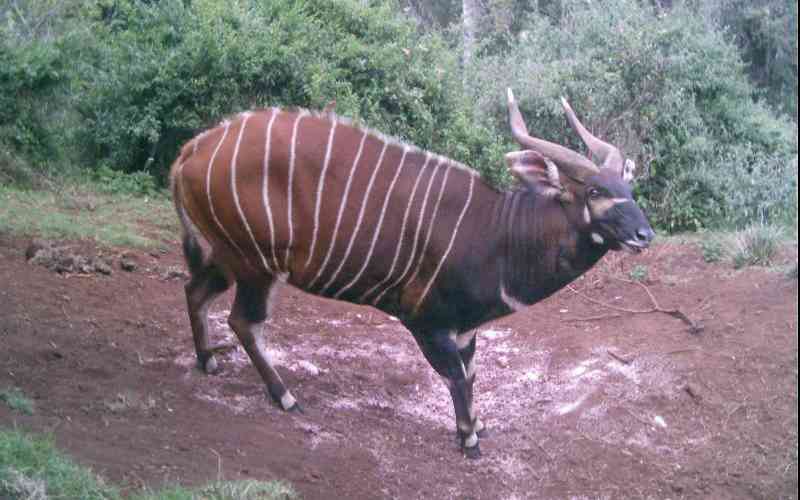
Prior to transportation, the four bongos underwent rigorous veterinary care at Safari Park Dvůr Králové in the Czech Republic. Two keepers from MKWC were involved in the process to ensure smooth integration into Kenya’s breeding programme.
Her Excellency Ambassador of the Czech Republic to Kenya Nicol Adamcová said the repatriation reflects strong conservation ties between Kenya and Europe.
“This highest recognition not only demonstrates how successful the conservation efforts of EAZA are, but it also declares that the Czech Republic as well as other European countries recognise wildlife conservation as one of the cornerstones in their cooperation with Kenya.”
The transfer was coordinated through the European Association of Zoos and Aquaria (EAZA), with participation from several member institutions including Zoo Bojnice, Frankfurt Zoo, Givskud Zoo, Berlin Zoo, Prague Zoo, Chester Zoo and Safari Park Dvůr Králové.
Dr Nick Davis of Chester Zoo, who coordinates the EAZA breeding programme for the mountain bongo, described the move as a milestone in international collaboration.
“This transfer is the result of years of planning and partnership. It is a prime example of how EAZA and its member zoos can support wildlife recovery in a practical way, through expert population management in human care, international collaboration, and a shared commitment to the future of threatened species in their natural range,” he said.
At MKWC, the bongo population has grown from just 18 individuals in 2004 to 101 as of March 2026. The herd is now multi-generational and genetically managed, supported by science, veterinary expertise and strong institutional coordination.
MKWC Patron Humphrey Kariuki said the arrival of the four males marks a turning point.
“These four male bongos will reinforce the existing population of over 100 individuals and enhance breeding capacity, providing an opportunity to expand our herds and bringing us closer to a future where the mountain bongo once again thrives in the wild.”
The conservancy’s programme integrates controlled herd structures designed to replicate natural systems, alongside behavioural conditioning to prepare animals for survival in the wild.
Animals born at MKWC are gradually transitioned to the Mawingu Mountain Bongo Sanctuary, a 776-acre protected forest within the Mount Kenya ecosystem managed in partnership with the Kenya Forest Service.
Within this secure habitat, early signs of successful adaptation and reproduction have already been recorded—offering proof that structured rewilding can work.
The project aligns with Kenya’s broader conservation strategy, which aims to grow the mountain bongo population to at least 750 individuals by 2075.
It also follows the “One Plan Approach” to conservation, linking captive populations abroad with in-country recovery efforts through coordinated planning and shared expertise.