

Audio By Vocalize

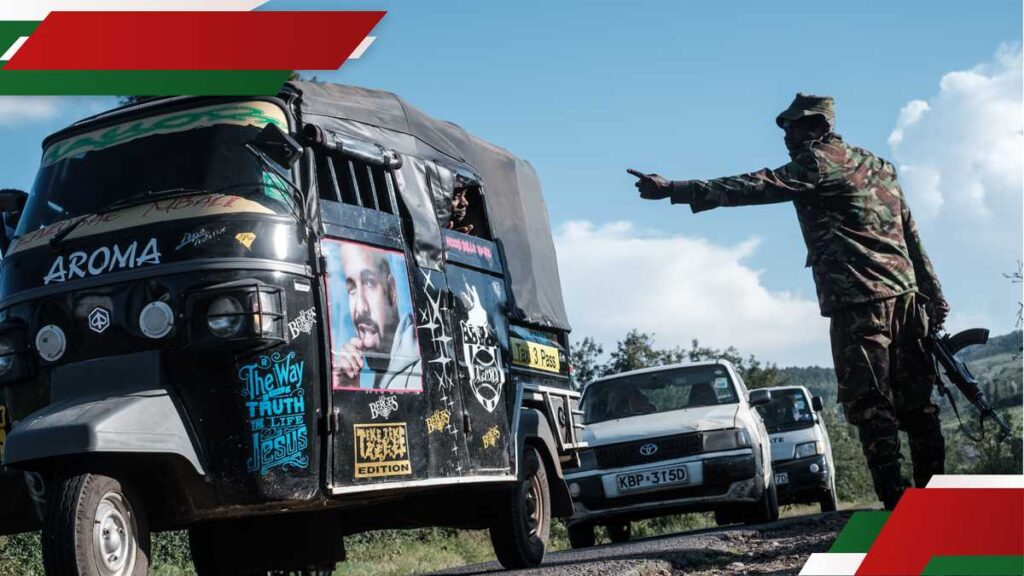
One of Kenya’s toughest off-road motorsport contests returns to the unforgiving terrain of Samburu later this month, with a full field of 65 vehicles confirmed for the 37th edition of the Rhino Charge.
Organisers confirmed the host county during the official drivers’ briefing at the Braebirn School in Nairobi yesterday, where Clerk of Course, Don White, outlined what is expected to be one of the most competitive editions in recent years.
Scheduled for May 29 to 31, the annual event will once again bring together some of the country’s most experienced four-wheel-drive competitors in a unique endurance battle, all in aid of environmental conservation.
Unlike conventional rallying, the Charge is not about outright speed. Competitors are required to visit a series of hidden checkpoints spread across a remote and punishing landscape, with the winner being the crew that covers the shortest total distance within approximately 10 hours of competition.
The exact location of the course remains a closely guarded secret and will only be disclosed shortly before the event, preserving what organisers describe as the essence of the challenge – blind navigation under extreme conditions.
That format has, over the years, made the Charge one of the most technically demanding motorsport events in the country, often rewarding strategic thinking and route judgment ahead of raw horsepower.
This year’s competition carries added intrigue after organisers confirmed the return of 58 previous entrants alongside seven new teams.
The entry cap of 65 cars has again been reached, underlining the continued demand for a competition that many within the off-road fraternity consider the ultimate domestic test.
Among the underlying narratives this year is the emergence of a new generation of challengers joining long-established family and institutional teams that have shaped it over the last three decades. Organisers believe this transition is important in sustaining the future of the event while also widening its fundraising reach.
“We have seven new entrants to the Rhino Charge this year, which signifies growing relevance to the new generation. This not only makes the event more sustainable but also helps us operate at full house and secure additional funding for Rhino Ark projects,” said White.
Competitive margins are also expected to be tighter following a review of results management and route tracking systems, with organisers introducing enhanced GPS-backed monitoring to improve accuracy in an event where winning distances are often separated by very small margins.
“We went through a whole process of reviewing how to get more accurate results to keep up with the increased competitiveness at the event,” White added.
Crews will receive route notes only days before the event and will be forced to make rapid decisions on whether to attempt direct but dangerous climbs, rocky gullies and riverbeds, or settle for longer but safer alternatives.
With Samburu’s semi-arid escarpments, dry river channels and broken bushland expected to provide the backdrop, mechanical reliability and teamwork between driver and navigator will again be decisive.
Over the years, the event has raised more than Sh2.7 billion toward conservation initiatives targeting some of Kenya’s most fragile water towers and wildlife habitats, including the Aberdare ecosystem, Mount Kenya, Kakamega Forest and the Mau complex.
Stay informed. Subscribe to our newsletter
Rhino Ark Chief Executive Officer Christian Lambrechts said the organisation continues to use the event as a practical funding engine for large-scale environmental work.
“Over the past year, we have invested considerable resources in the southern part of the Mau, a 158,000-hectare indigenous forest that forms critical catchments for the Mara, Sondu, and Ewaso Nyiro South rivers,” he said.
He added that fencing and restoration programmes in Mount Kenya and Kakamega were also progressing steadily as they seek long-term protection of biodiversity hotspots while reducing human-wildlife conflict.