

Audio By Vocalize

With less than two months before the 2026 Commonwealth Games light up Glasgow, Scotland, Team Kenya is quietly engineering one of its most deliberate and structured build-ups in recent memory.
The Games, set to be held from July 23 to August 2, will look markedly different from previous editions. A scaled-down programme featuring just 10 sports, including Para disciplines, will bring together about 3,000 athletes from 74 nations across four tightly clustered venues.
Kenya enters the Games with a rich Commonwealth history and a reputation that precedes it. But history alone will not win medals in Glasgow.
But their success will strongly depend on execution on athletes arriving in peak condition, on coaches making the right tactical calls, and on a system that supports performance from start to finish.
Kenya will feature in several disciplines, including para-athletics, 3×3 basketball, 3×3 wheelchair basketball, para-track cycling, weightlifting, para-powerlifting, athletics, boxing, track cycling, judo, swimming, and bowling.
It is a format built on sustainability and efficiency. But for competing nations, it also raises the stakes.
For Kenya, long accustomed to spreading its medal hopes across a broader athletics programme, the new format leaves little room for missteps.
According to Joycelene Nyambura, the Chef de Mission for the 2026 Glasgow Games, Kenya has started earlier preparations than in previous cycles, with the domestic athletics calendar adjusted to allow for a longer performance curve.
Structured competitions ranging from open meets to elite invitation events have been deliberately sequenced to guide athletes toward peak condition at the right moment.
“This extended window allows us to manage conditioning, recovery, and tactical development much more effectively,” said Nyambura, who is also Kenya Triathlon Federation president.
The approach also reflects growing awareness of the demands posed by an increasingly crowded international calendar.
While Kenya’s legacy in middle- and long-distance running remains central, the National Olympic Committee of Kenya (NOC-K) is intentionally broadening its focus with several disciplines involved.
The objective, Nyambura says, is to build a deeper, more resilient team capable of competing across a wider performance base, not solely relying on historically dominant events.
Behind the scenes, coordination between the Chef de Mission, federations, and technical teams has intensified, with emphasis placed on qualification pathways, athlete welfare, and logistical efficiency.
But for NOC-K president Shadrack Maluki, the reduced number of events heightens competition and limits margin for error.
Stay informed. Subscribe to our newsletter
With stringent selection criteria, focus has shifted from numerical strength to execution, ensuring that each selected athlete is capable of delivering under pressure.
“Every slot matters. Every performance must count,” Maluki said.
He also pointed to rising global standards, noting that traditional advantages in distance running can no longer be assumed amid growing competitiveness from other Commonwealth nations.
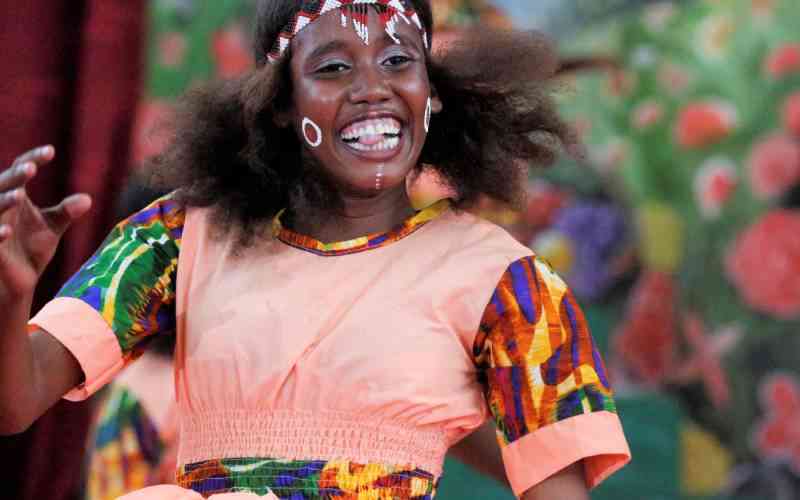
The symbolic arrival of the King’s Baton Relay in Nairobi last year offered a glimpse of what is at stake.
The event drew athletes, schoolchildren, and sports enthusiasts, blending celebration with a call to action. It reinforced not only Kenya’s place within the Commonwealth sporting family but also the expectations resting on its athletes. Additionally, the Games form a crucial bridge to the Olympic cycle, with lessons learned expected to shape Kenya’s preparations for Los Angeles 2028.