




Audio By Vocalize

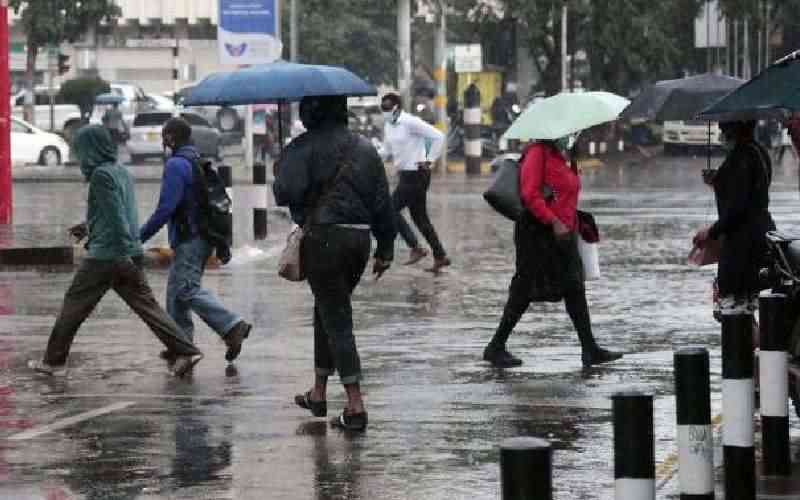
The weatherman has predicted more rain in most parts of the country over the coming seven days, extending similar conditions witnessed in the past couple of days.
The Kenya Meteorological Department, in its latest forecast, covering February 17 to 23, expects rainfall to fall over Nairobi, Western, Central, Nyanza, and Rift Valley regions.
In contrast, the dry streak faced by counties in the northern parts of the country will continue.
“Rains are expected to continue over Western Kenya, the Central Highlands including Nairobi, the Lake Victoria Basin, the Rift Valley, and parts of the South-eastern Lowlands,” the forecast stated, adding, “North-eastern and North-western Kenya are likely to experience generally sunny and dry conditions.”
Maximum temperatures of up to 30 degrees Celsius will affect many areas, including the Coast, the Southeastern Lowlands, the Northeastern, and Northwestern Kenya.
On the other hand, Kenyans have been warned to brace for cold nights.
“Night-time (minimum) temperatures below 10°C are expected in parts of the Central Highlands, the Central Rift Valley, Western Kenya, and areas near Mount Kilimanjaro,” read part of the advisory.
The continued dry conditions in northern Kenya have been blamed for drought conditions that have placed residents and livestock at the brink of death due to food insecurity after going several months without rain.
According to the government, more than three million Kenyans are in danger of suffering the negative impacts of the ongoing drought.
Last week, on Monday, February 9, Deputy President Kithure Kindiki said the state has adopted a plan where Sh4 billion will be spent every month on drought mitigation efforts.
In a statement released on Monday, February 16, embattled ODM Secretary General Edwin Sifuna and his allies called on the government to declare the situation a national disaster to unlock aid and prevent further learning disruptions.
“The situation has been exacerbated by the failure of the government to heed early warnings and institute appropriate responses. The government lied to Kenyans about the food situation in the country by exaggerating food production to justify high expenditure on subsidized farm inputs,” they said.
Further, they want the government to supply relief food to the affected areas.