

Audio By Vocalize
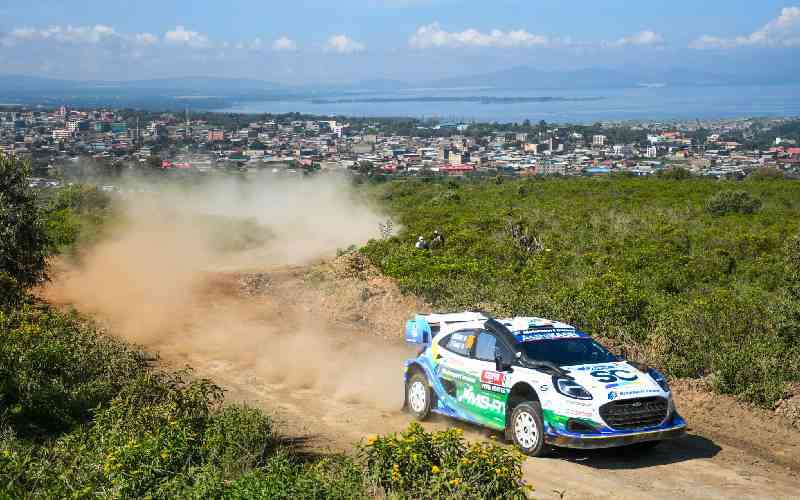
The 2026 WRC Safari Rally revved off in Naivasha on Thursday as fans looked forward to hair-raising shows and stunts.
The adrenaline filled competition was flagged off by Deputy President Kithure Kindiki at the Wildlife Research and Training Institute (WRTI) Service Park accompanied by Sports Cabinet Secretary Salim Mvurya and Sports PS Elijah Mwangi.
Safari Rally defending champion Elfyn Evans of Wales, of Toyota Gazoo Racing, was first off the ramp amid cheers and applause from Maasai dancers who sparkled the start line with their tapestried attires.
https://www.youtube.com/watch?v=Lw_Wm25FuwA
Not even the overcast weather could dampen the spirits of the Maasai dancers as they sang and danced for the drivers who left the start line one after the other for the rally proper at Camp Moran 1.
“We are thrilled to host the 2026 Safari Rally. Kenya is proud of this global championship because it puts the country on the world map, as a sporting and tourist destination,” Kindiki said during the afternoon flag-off.
Before the kick off of the competitive stages, the rally had started off with a hair raising shakedown earlier in the day, which revved off at 8.01 am at the newly created 6.31km Nawisa Stage.
The shakedown was topped by Belgian speedster Thierry Neuville of Hyundai. Finn youngster and Toyota Yaris dare devil Oliver Solberg came second as his three compatriots; Sami Pajari, Safari defending champion Elfyn Evans and world champion Sebastien Ogier followed suit in that order.
Following his early marker in the rally, Neuville, who is slowly getting his foothold on Kenyan soil after seasons of heartbreaks, downplayed the shakedown lead saying he wished things could unfold that way on the final day on Sunday.
“I don’t think anyone can predict the final result here this weekend,” Neuville admitted after his opening run. “We need to find the fine line between going fast enough and not too fast. The conditions are going to be horrendous at some points since this is a wet rally,” the Belgian told Standard Sports.
Nawisa, whose full name is the Naivasha Wildlife Sanctuary, famed for its critical habitat for wildlife research, monitoring, and eco-tourism and often utilising camera traps for surveillance, offered the drivers an early indication of punishment ahead of the rally.
Drivers battled rocky quarry and maneuvered narrow-rutted descending tracks that were compounded with the incessant rains pounding Naivasha that has made the terrains slippery.
The stage was tight, with lots of wild animals and panoramic views of the sprawling Naivasha town and its environs. It tested the drivers’ skills and the cars to the maximum with its abrasive surface, flowing corners and short straights.
“This rally is more challenging than ever,” Ogier said. “The rain has been intense, so some sections are going to be very, very challenging. It will be about survival.”
Stay informed. Subscribe to our newsletter
After the shakedown at Nawisa, rally proper followed with Kindiki’s flag-off, with two competitive stages namely Camp Moran 1 and Mzabibu 1, totaling 129.78km, covered in the afternoon.
The drivers went full throttle in the opening SS1 (Camp Moran 1 Stage) where they tackled the 24.35km stretch. This section gave the speedsters a test of meanness of the Safari as the cars tackled cliffs of the Rift Valley while racing through narrow and tricky tracks. It forced drivers into full concentration with aggression lowered.
The SS2 (Mzabibu 1 Stage), which was 8.86km long, was the spectator’s vibe, offering fans a lifetime experience of watching the vehicles whizz by.
The zone also brought spectators closer to event sponsors while at the same time providing them with ample action.
Mzabibu is also where the Rally Village is located making it such a hit with the fans for various entertainment purposes.
Today, the drivers will cover a total of eight stages totaling 385.39km which will snake through Camp Moran, Loldia, Kengen Geothermal and Mzabibu with a similar loop repeated in the afternoon.