



The National Gender and Equality Commission (NGEC) has raised fresh concern over the scale of gender-based violence in Kenya after new findings showed that 43 per cent of women aged between 15 and 49 have experienced intimate partner violence, while 13 per cent have been subjected to sexual violence.
The figures are contained in a new NGEC report examining school-level factors affecting girls’ access to quality education in marginalised communities, findings that the Commission says point to a wider national crisis placing millions of women and girls at risk.
Separate data from the NGEC paints an even bleaker picture of the crisis. According to the Commission, more than 43 per cent of Kenyan women have experienced gender-based or intimate partner violence, while 15 per cent of school-going girls have undergone FGM and 23 per cent are forced into marriage before the age of 18.
The data also shows that 65 per cent of girls face sexual harassment in public spaces, and 64 per cent of women experience technology-facilitated violence, including online abuse, stalking and digital surveillance.
Beyond the human cost, the Commission estimates that gender-based violence costs Kenya approximately Sh46 billion every year, representing about 1.1 per cent of the country’s gross domestic product.
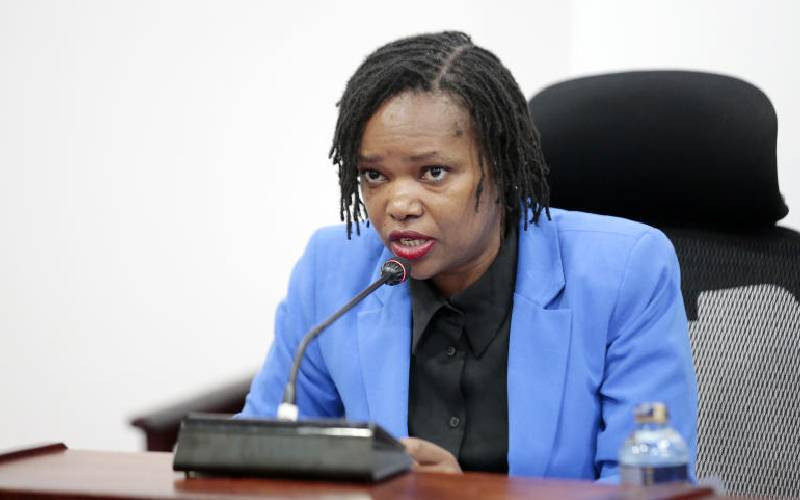
Presenting the report, Ms Maya Soma, a Gender Advisor at the Japan International Cooperation Agency (JICA), said harmful traditional practices continue to drive high levels of abuse, especially in vulnerable and marginalised areas.
Data collected under the Gender-Based Violence Elimination Project, she noted, shows that female genital mutilation (FGM) as well as early and forced marriages remain prevalent in several communities, in some cases involving girls in early adolescence.
“These practices persist despite the existence of strong laws, which highlights the major challenge of translating national legislation into real compliance at the community level,” Ms Soma said.
She warned that the assessment also exposed serious gaps in Kenya’s support infrastructure for survivors of violence.
“Out of the 47 counties, only 13 have operational Gender-Based Violence Recovery Centers, and there are just four public shelters across the entire country. This means that most survivors have little or no access to safe spaces, medical care, psychosocial support or temporary accommodation,’ she said.
The report further indicates that cases of gender-based violence remain significantly underreported.
“Many survivors, it notes, choose not to come forward due to fear of stigma, possible retaliation, or lack of confidence in the justice system,” she said.
In rural and remote areas, these challenges are compounded by long distances to service centres and shortages of trained personnel especially in school set up.
Even in areas where services exist, coordination among police officers, health workers and social service providers is often weak, leading to delayed or incomplete support for survivors.
“Poor coordination means survivors can be forced to move from office to office without receiving comprehensive care,” Ms Soma said.
Stay informed. Subscribe to our newsletter
While highlighting the challenges, the report notes some progress. Ms Soma pointed to positive outcomes from a survivor-centered approach piloted in Nairobi, Machakos and Kajiado counties, where frontline service providers received specialised training to improve the handling of GBV cases.
However, she cautioned that the impact of these interventions remains limited due to their narrow geographical reach.
“These gains are encouraging, but they are highly localised and must be scaled up nationally if we are to see sustainable change,” she said.
The Commission is now calling for urgent investment in additional shelters, stronger county-level policies, comprehensive training for service providers and sustained community engagement aimed at dismantling cultural norms that perpetuate violence.
The report notes that despite increased awareness and some gains in capacity-building, Kenya’s current systems fall far short of addressing the magnitude of the problem.
“Without stronger coordination between institutions and greater political commitment at both national and county levels, the Commission warns, the grim statistics are unlikely to improve” she stated.