


Audio By Vocalize

Leaving the relative comfort of Nairobi for the drought-stricken North Eastern counties, I expected to experience hardship, but nothing could have prepared me for the sheer impact of the drought on communities in the Arid and Semi Arid (ASAL) region.
My journey across Isiolo, Marsabit, and Samburu revealed a landscape that has been pushed past its breaking point-a region where the climate crisis has stripped away everything but the people’s raw will to live.
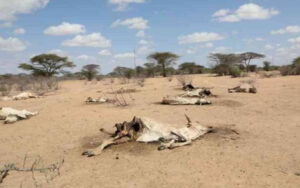
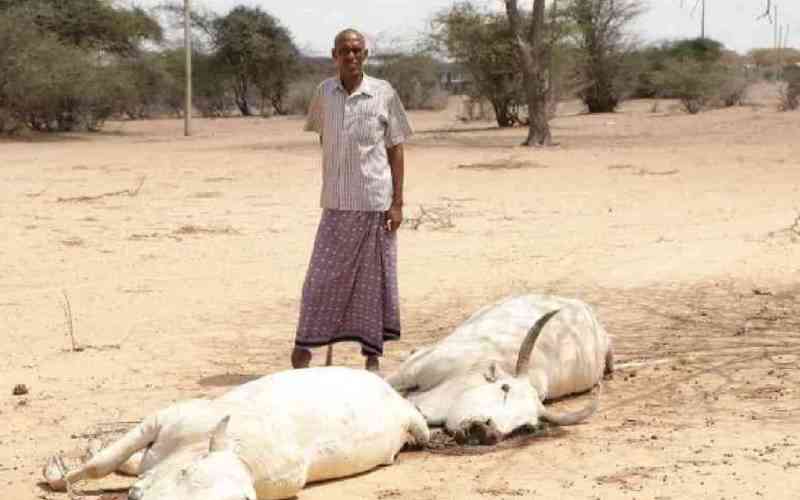
The ravaging drought, described as the worst in decades, has reduced the communities’ livestock to scattered carcasses and sparked human-wildlife conflicts and fueled inter-communal wars over scarce resources such as pasture and water.

Pastoralists who rely on animals for their daily sustenance are suffering massive losses. Their cattle and goats are dying, and for those that remain, their market value has plummeted. Goats that could have previously fetched the herders around Sh15,000 each are now selling for a mere Sh5,000.
Water sources have also dried up, with families trekking over five to 10 kilometres just to access boreholes. And even then, the water in many areas, such as Samburu, is not safe, with residents reporting diseases linked to the consumption of contaminated water.
Others, like those in the Laresoro settlement village in Samburu county, have resorted to digging shallow wells on the now dried-up Ewaso Nyiro river, where they say the quality of water is better.
But in doing so, they have had to compete with wild animals such as elephants for the scarce resource. In the process, herders have lost their lives and their homes have been destroyed as the animals migrate from the nearby reserves to the “newly discovered “ watering points.
The biting water scarcity has also seen pastoralists travel long distances, including across county boundaries and into contested grazing lands, further fueling resource-based conflicts.
Throughout my journey, I didn’t just see the drought; I could feel it in the suffocating dust and malnourished families trying to survive on what little had been left of the land.
Whereas the government has pledged to spend Sh4 billion per month to procure food, water, and livestock feed for the over 3 million affected families, more interventions, such as building water harvesting infrastructure and the facilitation of communities to grow drought-resistant crops, are needed.