
When Kenyan activist Boniface Mwangi arrived at the Serena Hotel in Dar es Salaam, he knew the risks.
He had travelled to Tanzania on May 18 to support opposition leader Tundu Lissu, who faced treason charges ahead of the October elections.
What followed became a defining moment in 2025’s continental crackdown on activism.
Armed men in civilian clothes stormed his hotel room the next morning, arrested him and drove him to an unknown location.
For three days, Mwangi and Ugandan journalist Agather Atuhaire endured what they later described as systematic torture, including sexual assault. They were eventually dumped at their respective borders, broken but alive.
https://www.youtube.com/watch?v=Y-wkF1L_Ohc
Their ordeal exposed a disturbing pattern that defined 2025 across Africa: governments from Nairobi to Conakry, from Harare to Abuja, unleashed unprecedented violence against activists, journalists and ordinary citizens demanding accountability.
Tanzania’s October elections triggered what activists called “The Great National Catastrophe.” Human rights groups submitted evidence to the International Criminal Court (ICC) alleging Tanzanian security forces killed between 700 and 3,000 protesters after the October 29 vote.
The government imposed a complete internet shutdown from October 29 to November 3, preventing documentation of violations.
United Nations (UN) human rights experts condemned widespread extrajudicial killings, enforced disappearances and mass arbitrary detentions, with reports indicating officers received orders to shoot to kill during an enforced curfew.
Bodies reportedly disappeared from morgues, with allegations that remains were incinerated or buried in mass graves.
Kenya documented 82 abductions of government critics since June 2024, according to the Kenya National Commission on Human Rights (KNCHR). The pattern was chilling: armed men in plainclothes, driving unmarked vehicles, snatching activists from their homes or streets in broad daylight.
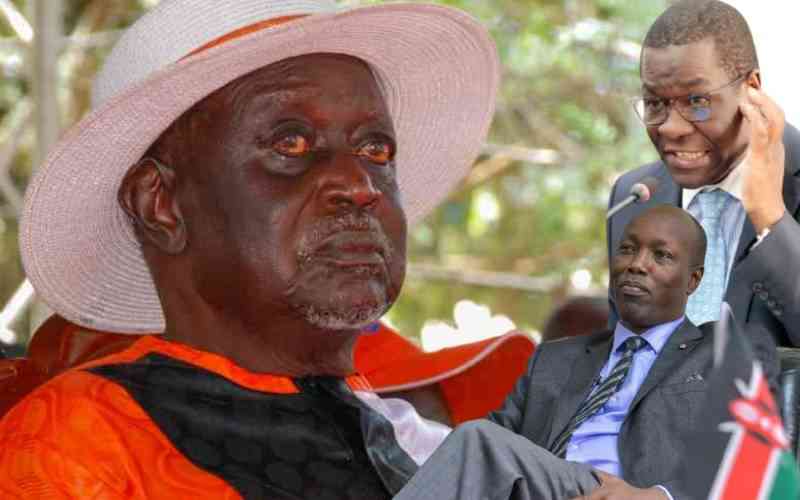
Some returned after days or weeks of detention, their bodies bearing torture marks, their spirits broken. Two activists, Martin Mwau and Justus Mutumwa, were found dead at the Nairobi Funeral Home on January 30, hours before the Inspector General of Police, Douglas Kanja and Director of Criminal Investigations (DCI), Mohamed Amin, were due in court to answer for the abductions.
The violence crossed borders in ways that alarmed human rights defenders.
Stay informed. Subscribe to our newsletter
In October, Kenyan activists Bob Njagi and Nicholas Oyoo were abducted in Uganda while attending opposition leader Bobi Wine’s campaign activities.
They spent 38 days in detention before diplomatic pressure secured their release. Earlier, Ugandan opposition figure Kizza Besigye was abducted in Nairobi in November 2024 and transferred to Uganda to face military trial, raising concerns about regional authoritarian cooperation.
Nigeria’s EndBadGovernance protests, sparked by economic hardship in August 2024, drew thousands to the streets demanding an end to rising living costs.
Security forces responded with deadly force, killing at least 24 people and arresting roughly 700 protesters, according to Amnesty International.
Eleven activists faced treason charges punishable by death, spending 59 days in detention before a Federal High Court in Abuja struck out the case on December 10, 2025, ruling that prosecutors showed a lack of diligence.
West Africa’s military regimes turned enforced disappearances into state policy.
In Guinea, activists Oumar Sylla and Mamadou Billo Bah vanished on July 9, 2024, abducted from Sylla’s home on the eve of protests against the high cost of living.
More than a year later, their fate remains unknown despite promises of investigation. The regime escalated its tactics throughout 2025, with activist Abdoul Sacko abducted in February and found the same day in critical condition, tortured and abandoned in the bush.
Burkina Faso’s military authorities arrested journalists Guézouma Sanogo and Boukari Ouoba, president and vice president of the Association of Journalists of Burkina Faso, in March 2025 after they denounced attacks on press freedom.
Their families heard nothing for a week until a video surfaced showing them in military attire. AI noted that enforced disappearances in Burkina Faso sometimes end with forced military enlistment, sending detainees to face armed groups at the front.
Zimbabwe witnessed a fresh wave of abductions amid President Emmerson Mnangagwa’s attempt to extend his rule beyond 2028.
Activist Godfrey Karembera was abducted and later found in state custody, allegedly beaten and denied medical care.
Two student leaders from Chinhoyi University, 23-year-old Marlvin Madanda and 21-year-old Lindon Zanga, were abducted and tortured in November.
The pattern echoed Zimbabwe’s 40-year history of state-sponsored disappearances, including journalist Itai Dzamara’s 2015 disappearance, which remains unsolved.
The tools of repression were remarkably similar across the continent: abductions by plainclothes operatives, treason charges for peaceful protests, sexual torture, internet shutdowns and controversial laws weaponised against dissent.
Tanzania’s Cybercrime Act, Zimbabwe’s Patriotic Act and Nigeria’s Counter-Subversion Bill all served the same purpose: silencing opposition.
What made 2025 particularly alarming was the emergence of cross-border cooperation between governments.
The arrests of Mwangi in Tanzania, Besigye in Kenya and the back-and-forth abductions of activists across East Africa pointed to what human rights defenders called “a regional authoritarian alliance.”
Governments appeared to be sharing intelligence and coordinating crackdowns, treating activism itself as a transnational threat.
Senegal’s story offered a grim reminder of impunity’s cost, as between 2021 and 2024, at least 65 people were killed during protests, with a further 2,000 arrested.
In February 2025, security forces killed four people, including a 16-year-old boy, protesting delayed presidential elections. An amnesty law passed on March 6, 2024, covered all acts classified as crimes relating to demonstrations, effectively shielding killers from prosecution.
The year’s violence came as African youth, particularly Gen Z, refused to accept politics without accountability.
Economic grievances drove the protests: International Monetary Fund (IMF)-imposed austerity measures, rising living costs, unemployment and corruption. But governments chose bullets and abductions over dialogue.
By December, the toll was staggering, with at least 97 deaths by police in Kenya alone, according to the Independent Medico-Legal Unit (IMLU).
Hundreds killed in Tanzania and scores dead in Nigeria. Dozens disappeared in Guinea, Mali, Burkina Faso and Niger. Countless more tortured, traumatised or forced into silence.
The international response remained muted, with the US Department of State expressing concern over specific cases, UN human rights experts issuing statements condemning violations and the ICC receiving complaints.