
Audio By Vocalize

Despite a high number of vulnerable children in the country needing support, presidential secondary bursary allocation has been reduced from Sh400 million to Sh100 million for the coming financial year, 2026/2027. IPF has said.
In the past 5 years, the government has consistently allocated Sh400 million per year for the presidential secondary bursary.
Currently, the country has multiple bursary schemes, including the NGCDF, County bursaries, and the presidential secondary school bursary, all operating in parallel.
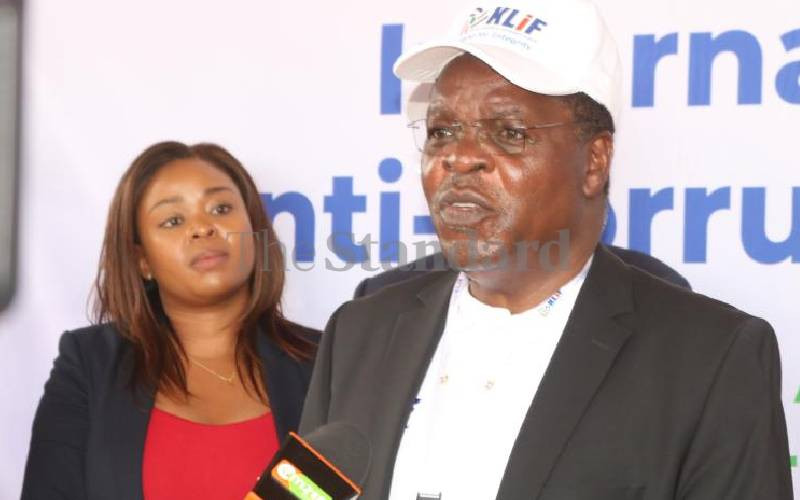
“In social protection, we have multiple bursary schemes operating in parallel, leading to duplication, leakages, and inequitable access,” said Daniel Ndirangu, CEO of the Institute of Public Finance.
Financial Think Tank, Institute of Public Finance (IPF), has opined that consolidating all bursaries could provide full school capitation and free secondary education.
Furthermore, adding Sh26.5 billion in bursary money from the 2023/24 financial year would reduce the Sh46 billion deficit in free secondary education to just Sh20 billion.
“If all bursaries were to be reallocated to capitation, there would be a surplus of Sh20 billion, while making secondary education free,” Martin Kabaya, IPF.
IPF CEO has emphasised the need to consider folding all bursaries and redirecting the resources towards capitation.
“If this is centralised through the capitation channel, then it avoids duplicity and also achieves the allocation efficiency that is clearly missing from NGCDF, county bursaries, and the presidential one,” Ndirangu said.
The number of beneficiaries for the presidential secondary school bursary increased from 22,300 in the financial year 2020/21 to 35,000 in 2022/23 before falling back to 22,300 in 2023/24.
In 2024/25, allocations declined to Sh325 million while beneficiary numbers rose again to 35,000.
The annual shadow budget snapshot by the Institute of Public Finance IPF has noted that the government should increase allocations in FY 2026/27 beyond Sh400 million to accommodate more than 35,000 beneficiaries while maintaining adequate per capita support.
Over the past 5 years, the government disbursed Sh60 billion NGCDF bursaries, benefiting about 1.3M learners every year.
An Auditor General Report (OAG) of the NG-CDF revealed that about 73 per cent of the sampled 570 beneficiaries received multiple bursaries from different schemes in the FY 2023/24
The think tank has also identified inefficiencies such as duplication of bursaries from different schemes.
Stay informed. Subscribe to our newsletter
Also, some students received more money than the actual cost of their education, and there was a Sh2.1 billion unsupported NGCDF expenditure, and another Sh886.7 million county disbursements.
Additionally, counties left Sh1.29 billion unspent in the financial year 2023/24, signaling 88.4 per cent absorption. Migori County alone accounted for 83 per cent, Sh900M of unspent funds.
“If you remain with Sh1.92 billion, you can imagine the number of kids who went unsupported in that financial year,” Martin Kabaya, IPF.
Given the Leakages, financial inconsistencies, diversion of funds, and uncollected cheques, Kabaya has blamed the current schemes for having allocative inefficiencies.
“The current channel approach does not prioritise efficiency, equity, and outcomes, reducing the real impact of spending,” Kabaya said.
According to IPF, the financial inconsistencies of over Sh60 million across three counties, Isiolo, West Pokot, and Nyandarua, and cases of misuse, including diversion of funds and uncollected cheques, weaken targeting and service.
According to the shadow budget, redirecting bursary funds into capitation would make secondary education truly free, reduce deficits/surpluses efficiently, cut waste, and free up resources for school feeding and other safety nets, ultimately delivering better outcomes for vulnerable children.
In the current financial year 2025/2026, the resource requirement for free secondary education was Sh131.1 billion, but the programme received an allocation of Sh85.1 billion, leaving a deficit of Sh46 billion. The financial year 2026/27 has a resource deficit of Sh5.2 billion.
Currently, there are ongoing efforts to consolidate various education bursaries and scholarships into a single, centralized National Education Fund.
The goal is to merge funding from the National Government Constituencies Development Fund (NG-CDF), National Government Affirmative Action Fund (NGAAF), county governments (governors/MCAs), and the Ministry of Education into a streamlined system to make basic education free for all learners.
Acknowledging that layers of duplication in awarding bursaries have been hurting education, Moses Wetangula, National Assembly Speaker, directed members of parliament to formulate laws to integrate bursaries and public scholarships into one fund, early this year.
Equally, Emuhaya Member of Parliament had earlier in 2026 proposed the consolidation of all education bursaries into a single fund.
“There are monies given by Members of Parliament like myself, others given by governors, and there is also the presidential scholarship?” Kuppet national chairman Omboko Milemba.