
Audio By Vocalize

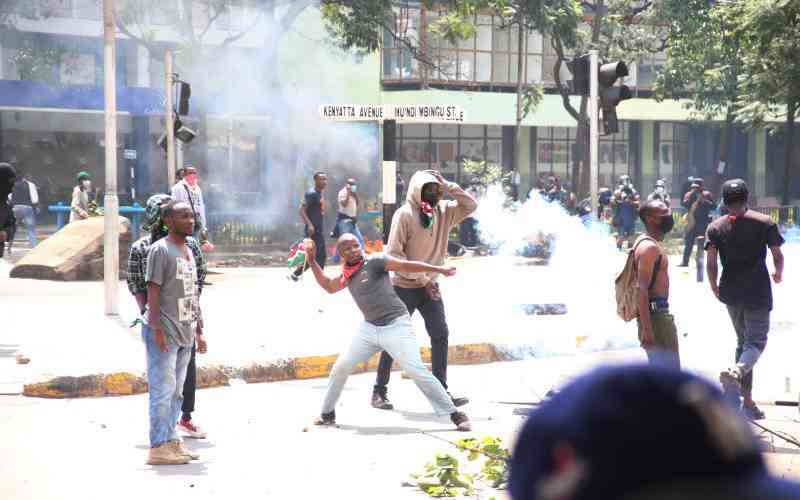
Victims injured during recent protests and families of those killed have 21 days to lodge complaints with the Kenya National Commission on Human Rights (KNCHR) as the process of developing a compensation and reparations framework begins.
The commission issued the call on Monday following a meeting with the 10-point Agenda Implementation Committee, which is overseeing reforms linked to the protests.
Officials said the appeal is aimed at capturing cases that may not have been formally reported to the commission or any other state agencies, so they can be verified and considered for compensation.
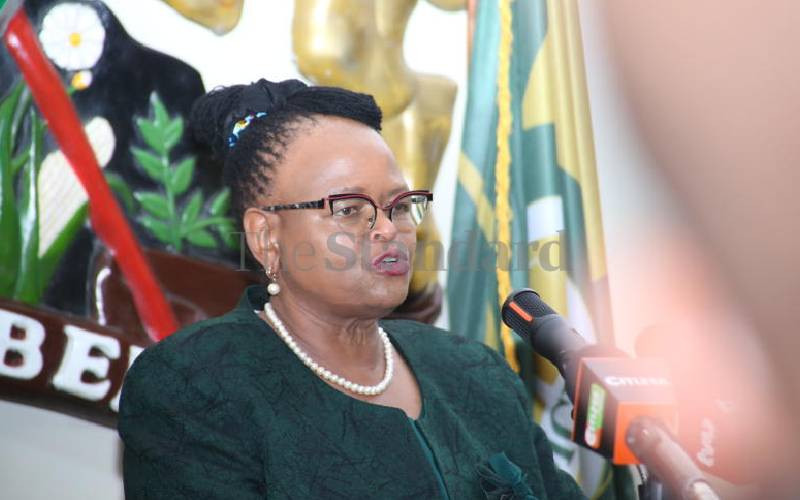
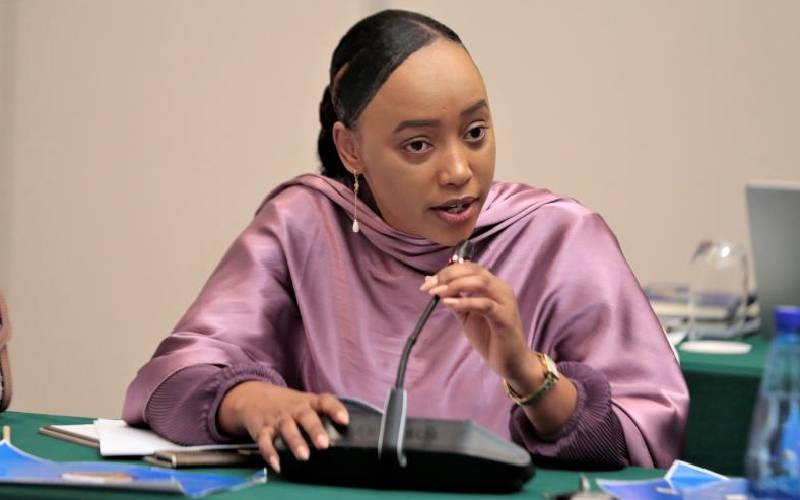
KNCHR chairperson Claris Ogangah said the commission is compiling a national database of victims using reports collected over the years, including those from recent demonstrations.
“We already have a list of people who reported to the commission in 2017,2024 and 2025. However, some people never reported to the commission, the police, or oversight bodies, and we are calling on them to come forward within the next 21 days,” said Ogangah.
Ogangah added that they are consolidating data on victims recorded at the commission, police, Independent Policing Oversight Authority (IPOA), and health centers into one document.
Those submitting complaints will be required to provide documentation as evidence or witnesses to support their claims, with the commission warning that false reports could attract legal action.
To weed out false claims, Ogangah said they have experts who will help verify the complaint’s documentation.
“The doctors will help us to verify medical reports, and the police will help us to verify reports that were made to the police,” she said.
The compensation effort follows a court directive assigning KNCHR responsibility to develop a national reparations framework for victims of human rights violations linked to protests.
The judgment issued by the High Court in Kirinyaga on December 4, 2025, affirmed the commission’s constitutional mandate to design a reparations framework for human rights violations as provided under Article 59 of the Constitution and the KNCHR Act, 2011.
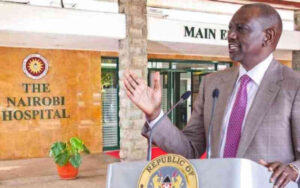
On March 6, 2026 president William Ruto, through a gazette notice, gave the commission 60 days to submit a report containing a framework for compensation and reparations to victims of human rights violations.
Ogangah stated that the framework will go beyond financial compensation to include other forms of reparations.
She said restitutions, rehabilitation, satisfaction, and guarantees of non-repetition would be included as other forms of human right-based compensation and reparations framework.
“It is not paying people for dying. It is acknowledging that there was a wrong that happened, and it is a way of saying “sorry” to the people who suffered losses, and we would want the public to look at it from that perspective.”
Stay informed. Subscribe to our newsletter
She added that a public apology as an official acknowledgment of wrongdoing will also form part of reparations.
“We are using proper guidelines on compensation, so someone cannot come and say this is not enough. Because it’s not an amount that brings the person to life. It cannot take you back to where you are.”
“It will never be enough. It’s just an amount to make it easier for you as you go through the process of dealing with a loss. And that’s the whole essence of reparations,” she added.
The commission indicates that reparations are a voluntary process and that the victims will sign consent forms allowing the commission to include them in the compensation list.
The government has already set aside Sh2 billion in a supplementary budget to compensate victims, although officials said it is too early to determine whether the amount will be sufficient.
“When we complete the list, we will know how many people have died, how many people have been injured, and the amount of money we will be proposing. Only then will we know whether Sh2 billion is enough or not.”
“If it is not enough, we will make recommendations for the government to consider during the financial year 2026-2027 so that it can compensate those who have not been compensated during this process,” said the KNCHR chairperson.
Once the verification process is complete, the commission will compile a list of victims and propose compensation ranges based on the severity of injuries or cases where lives were lost.
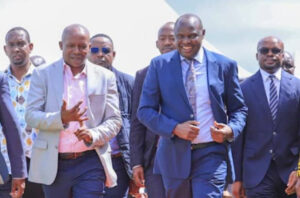
The announcement came after the 10-Point Agenda Implementation Committee presented a progress report to President Ruto and ODM Party leader Dr. Oburu Oginga during the broad-based joint parliamentary group meeting at the Kenyatta International Convention Centre (KICC).
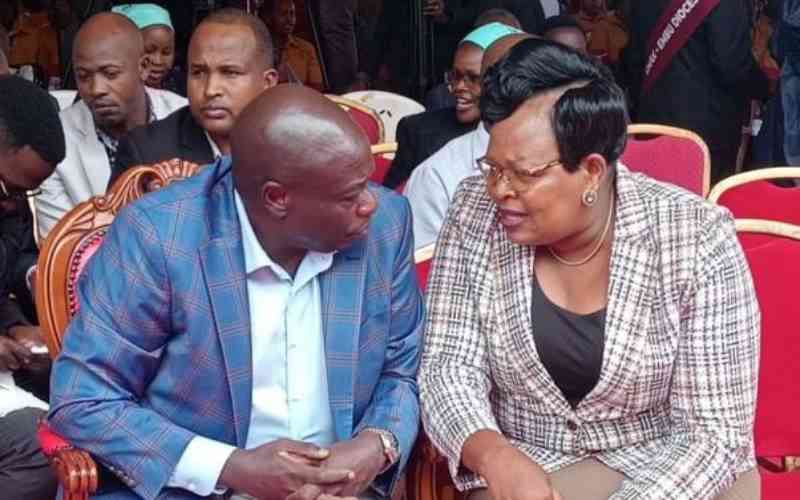
The committee’s vice chairperson, Javas Bigambo, praised the commission for moving swiftly to develop the compensation framework.
Bigambo said that if the Sh2 billion allocation proves inadequate, the government may seek additional funding in the 2026/2027 financial year.
“The commission has indicated to us that they are keen to ensure this process commences by June this year. And if the allocation may not suffice for the compensation of the victims, they may request additional funds,” said Bigambo.
On the concerns of how far back the compensation process would extend, Ogangah said earlier processes had already documented historical injustices and other politically related violations, including 2007/08 Post-Election Violence, particularly through the work of the Truth, Justice and Reconciliation Commission (TJRC).
She noted that the process documented violations that occurred after independence, and that the records already exist within the government.
“We are not going to duplicate that particular process. There’s already a process, and it’s up to the executive to prioritize which victims they would want to compensate. As it appears right now, the priority is victims of protest,” said Ogangah.
“So the commission will also prioritise the victims of protest, but will ensure that within the reparations framework, we ensure that there are other victims who the government needs to put in place mechanisms, to compensate or to provide reparations depending on the historical or human rights violation that took place,” Ogangah added.
Besides compensation, KNCHR is also working on proposals to improve the legal framework governing demonstrations and public assemblies under Article 37 of the Constitution.
Article 37 of the Constitution of Kenya (2010) guarantees every person the right, peaceably and unarmed, to assemble, demonstrate, picket, and present petitions to public authorities.
Ogangah said that although Article 37 guarantees the right to peaceful assembly, it has never been fully implemented through an Act of Parliament.
“Demonstrations and assemblies only become problematic when they have to do with politics. We’ve seen teachers, doctors, members of the Law Society protesting, and it’s a peaceful protest.”
“Why is it a big issue when it’s a protest that has to do with politics? And part of the work that we want to do is to guide what the legislative framework needs to look like,” said Ogangah.
The commission said the reforms could introduce clearer guidelines on how protests should be conducted, including possible parameters on locations, timing, and coordination between organisers and the police.
She said that several attempts to introduce laws governing demonstrations have previously faced public opposition.
The commission and the committee also urged politicians to keep the compensation free from political interference, ensuring that victims and their families receive justice and closure.
“We want to finish this issue before it becomes politicised because reparations are not a political issue. It is a matter of ensuring that those who were injured and families of those who lost their loved ones receive their rights,” said Ogangah.