




Audio By Vocalize

Health Cabinet Secretary Aden Duale has defended the government’s involvement in matters surrounding the Nairobi Hospital, citing concerns over governance and financial management at the facility.
Duale said the government has no interest in taking over the hospital but is obligated to safeguard one of Kenya’s premier level-six referral facilities.
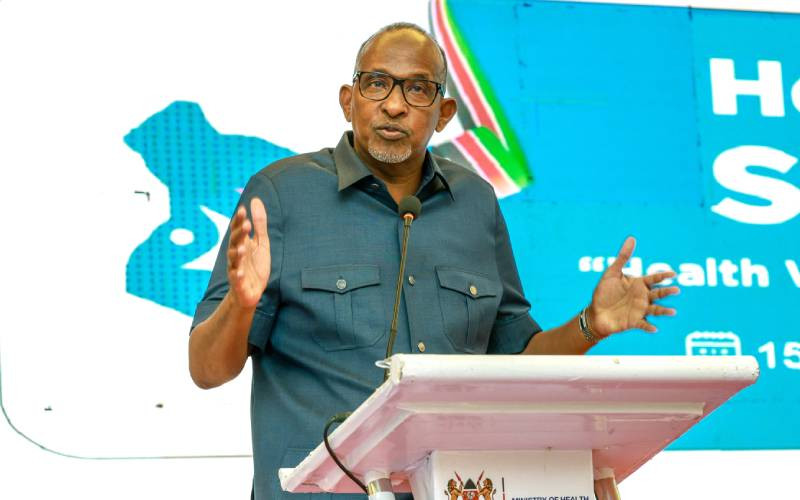
Addressing health sector stakeholders during the Health Integration Summit held in Mombasa yesterday, Duale clarified that the hospital is owned by the Kenya Hospital Association and operates as a company limited by guarantee, meaning it is owned by members rather than shareholders and therefore cannot be acquired by individuals.
https://www.youtube.com/watch?v=meconPAXF6U
However, Duale revealed that the hospital has been grappling with serious governance and financial management challenges, with at least 11 court cases filed over the past three years.
According to Duale, the issues have led to shortages of essential medical supplies and delays in surgeries, affecting patient care.
He said the government has directed the Kenya Medical Practitioners and Dentists Council to conduct a clinical audit of the hospital’s infrastructure and operations to ensure standards are maintained.
Duale further disclosed that several long-serving doctors had sought intervention from both the government and the president over the management of the hospital.

As a result, investigative agencies have been directed to probe allegations including poor governance, tax evasion and corruption.
He denied that he has a personal interest in the premier hospital, maintaining that he has intervened just as a CS.
“The government’s primary goal is to protect and preserve the hospital’s reputation as a leading national and regional health facility. I do not have a personal interest in the hospital. My interest is just like for the other level six hospitals, like Kenyatta National Hospital. I serve public, private and mission hospitals,” he said.
He urged leaders and the public to avoid politicising the matter, noting that the Ministry of Health is responsible for oversight of both public and private health institutions.
Duale maintained that reforms will be implemented to restore stability at the hospital, stressing that the Kenyan patient must remain the most important priority in the country’s health system.
Stay informed. Subscribe to our newsletter
Health stakeholders called for the integration of HIV services into the broader healthcare system to safeguard gains made in the fight against the disease amid shifting global health financing.
Dr Stephen Ndolo from the National Syndemic Disease Control Council said the summit brought together government officials, county leaders, development partners and community representatives to review progress made in the response to HIV and chart the way forward.
Ndolo noted that Kenya has made major progress in reducing HIV-related deaths and infections over the last two decades.
He said in 2003 the country recorded more than 100,000 HIV-related deaths annually, but the number dropped to about 21,000 last year, while new infections declined from over 100,000 to approximately 19,000.
However, he warned that some regions continue to record high prevalence rates, particularly in Nyanza counties, including Kisumu, Siaya and Homa Bay.
Urban counties such as Nairobi, Mombasa and Kiambu are also seeing rising infections largely due to population mobility around major metropolitan areas.
“Kenya has also introduced new long-acting HIV prevention technologies, such as Lenacapavir and Cabotegravir, to improve prevention and treatment adherence. But Kenyans should know that this does not prevent sexually transmitted infections or prevent unplanned pregnancies,” he warned.
He also assured that the country currently has an adequate condom supply and is implementing a total market approach, where free condoms are distributed to vulnerable groups, subsidised ones are available for low-income users, and commercial products remain available for those able to purchase them.
Meanwhile, HIV activists urged the government to ensure people living with HIV are included in decision-making and benefit fully from the integrated healthcare system.
Patricia Asero Ochieng, director of the Renga Women Fighting AIDS Group, said patients often suffer from multiple illnesses, including tuberculosis, malaria and non-communicable diseases, and therefore require comprehensive care in one facility.
She called for a “one-stop shop” model where patients can receive treatment for HIV alongside other conditions, such as diabetes, hypertension, cancer and hepatitis, without visiting multiple clinics.
Achieng also urged the government to fully integrate HIV services into the Social Health Authority benefits package and strengthen monitoring of drug side effects through regular medical testing.
Meanwhile, Duale said the government was restructuring the health system to integrate HIV services into broader healthcare delivery under ongoing reforms aimed at strengthening the country’s health system.