



Audio By Vocalize
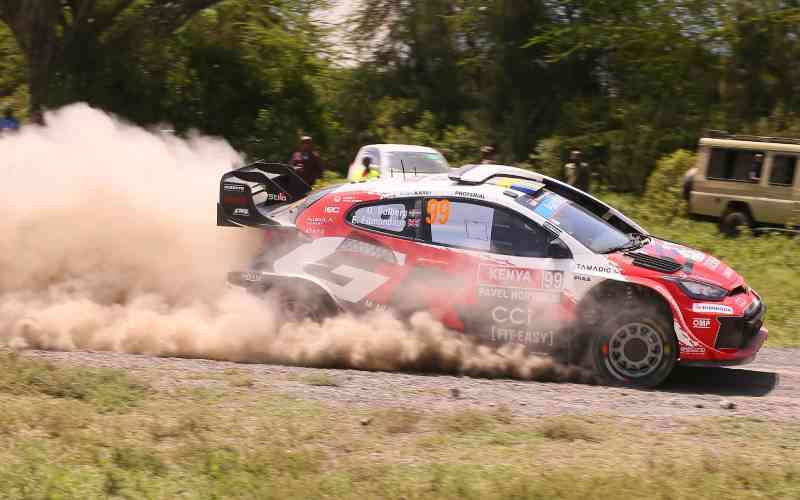
Widely regarded as one of the most extreme off-road events on the World Rally Championship (WRC) calendar, the Safari Rally 2026 is living up to expectations.
Since Thursday, the world’s top rally drivers have been criss-crossing the hills and valleys, having to deal with a mix of rough gravel, unpredictable weather, and punishing terrain in Naivasha.
This year’s race shifted from the traditional Nairobi stage start, allowing drivers to focus on the harsh, rocky terrain.
As of yesterday, every driver had no choice but to rapidly adapt to the newly configured high-intensity stages and fine-tune their race strategies. Mud, deep sand, jagged rocks, vast savannah sections, and the notorious fesh-fesh have all contributed to the unpredictability of stages, leaving drivers to rethink their strategies before selecting tyres for their machines.
Bearing this in mind, this year, Hankook Tire and Technology Limited, the official and exclusive supplier for the 2026 season of the FIA WRC, introduced a new soft gravel tyre specification, the Dynapro R123.
According to Hankook, this new tyre has been selected by 90 percent of drivers from day one, having been engineered with an optimised compound that enhances low-temperature flexibility.
Considering the temperature issues that have befallen drivers in the last 3 days, the concept of the new tyre delivers improved grip, especially on wet and slippery surfaces. This has somewhat helped drivers sustain durable performances throughout the rally, with a few punctures witnessed.
First selected as an official tyre supplier in 2014 for the FIA Junior WRC and associated championship, Hankook became the official tyre supplier for all classes starting last year. They are among the few brands to sponsor two of the five major FIA world championships, including the Formula E and premier series for electric vehicle racing. Standard Sports spoke with Steven Cho, the Hankook WRC representative and competition CEO.
“A lot has changed in the one year that we’ve been here in the WRC. From last year’s Kenya specification tire, we’ve changed the gravel soft compound in the pattern, in the rubber compound, as well as the construction of the tire. So the pattern has got bigger blocks, more robust, and can handle more of the sort of rough roads that we see here. The rubber compound has gotten softer, and we’ve developed it in a way that it works better and activates better in lower temperatures,” he said.
With the rain pounding hard on some days, Cho said the new tyre was more compliant.
“And then, particularly in wet conditions, it should provide better grip. The construction itself has also been changed. From a manoeuvrability perspective, it should have better drivability,” he added.