






Audio By Vocalize

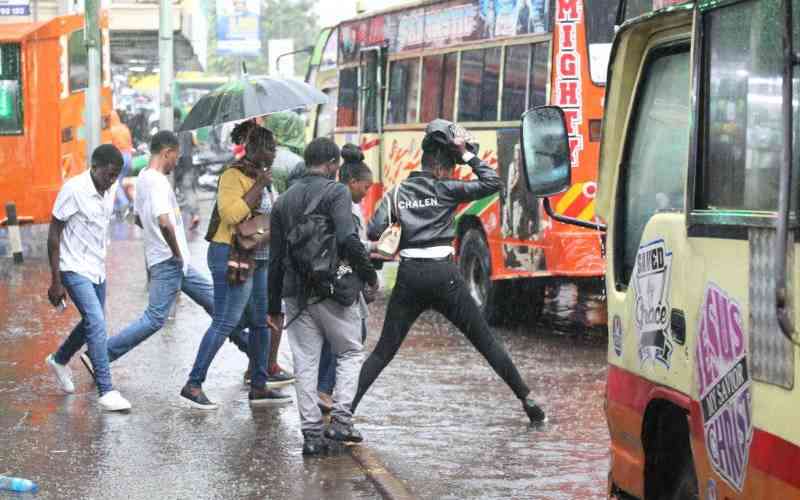
Nairobi Governor Johnson Sakaja has warned that the capital’s drainage infrastructure is incapable of handling the increasingly intense rainfall being experienced.
The governor said that Nairobi’s challenges stem from decades of planning decisions, including the construction of parts of the city on swampy land and cannot be resolved through quick fixes.
Speaking during an interview on Citizen Sunday Live, Sakaja said Nairobi requires significantly more funding and stronger collaboration with the national government to address what he described as a “generational infrastructure deficit.”
“The drainage that we have is not built for this amount of rain. Nairobi cannot be organised based on the share of revenue that it gets, like other counties,” he said.
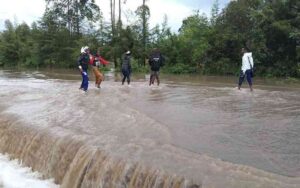
His remarks come as the city continues to grapple with periodic flooding that disrupts transport, damages property and in some cases leads to loss of life.
Over the years, heavy rains have repeatedly paralysed major roads in the capital, with neighbourhoods such as Eastlands, South B, South C, and parts of the central business district frequently submerged.
https://www.youtube.com/watch?v=IfsCfC2ekL4
Flooding has long been part of Nairobi’s history.
One of the most severe disasters occurred during the 1997–1998 El Niño floods in East Africa when torrential rains overwhelmed drainage systems, washed away roads and displaced thousands of residents.
Sakaja said Nairobi is still trying to recover from years of neglect, noting that most of the capital’s drainage and planning systems were designed for a far smaller population.
“There is no quick fix for this city; it is not possible. We are dealing with a generational infrastructure deficit, drainage built for 500,000 people, planning and development control for a smaller city than we have today,” he said.
While defending measures taken by the county government, including evictions along riparian land, Sakaja said enforcement efforts have often been politicised.
“My friends in Grogan were really affected, but they know they were supposed to move… I’ve seen politicians politicising these, yet they are the same ones telling people not to move when they need to move,” he said.
He argued that without such enforcement actions, the human toll during floods could have been significantly higher.
“But if we had not made that decision, the number of people who died during the floods would have been much higher.”
Stay informed. Subscribe to our newsletter
Waste disposal practices also remain a major contributor to Nairobi’s flooding problem. Sakaja said drainage channels frequently become clogged with garbage dumped by residents.
“Who dumps in those drains? Who is littering in those drains? We have provided bins. There is a responsibility all of us must bear,” he said.

The governor said Nairobi requires at least Sh60 billion annually to run effectively, insisting the current revenue allocation model does not reflect the capital’s unique pressures.
“You must have a collaborative effort for the city; there is no other formula,” Sakaja said.
Despite criticism over some enforcement measures, Sakaja maintained that the county will proceed with actions necessary to safeguard the city.
“I will just close my ears and do what must be done for this city; I do not care about the political ramifications. What must be done will be done,” he said.
He said the county is working with the national government to address key roads and waterways that fall outside its jurisdiction.

Sakaja said Nairobi’s flooding problem cannot be solved by the county government alone, revealing that a complete overhaul of the city’s drainage system would cost about Sh25 billion.
He noted that this was the reason behind cooperation agreement with the national government, aimed at addressing major infrastructure challenges.
The partnership will also support the construction of a 54-kilometre sewer line expected to cost about Sh50 billion.