




Audio By Vocalize

More than 3.27 million people across Kenya’s arid and semi-arid lands (ASAL) are facing acute food insecurity, with humanitarian leaders warning that the situation could deteriorate rapidly if the March–May long rains fail.
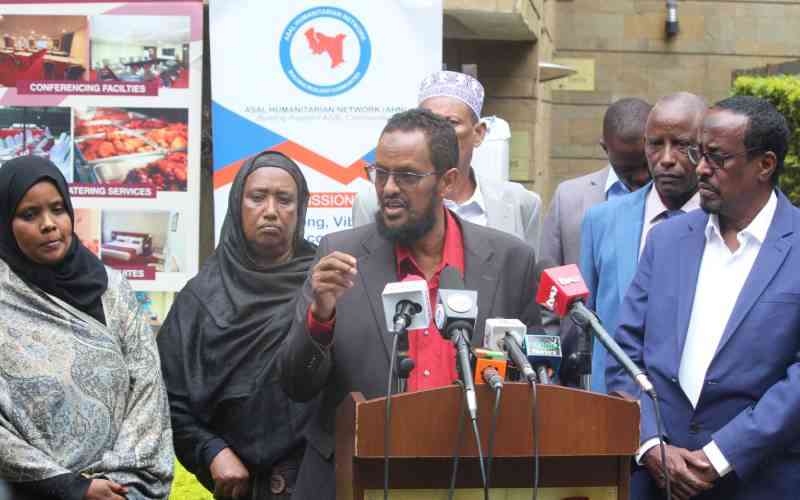
Speaking in Nairobi, officials from the ASAL Humanitarian Network (AHN), a consortium of 30 local organisations working in drought-affected counties, said communities are already experiencing severe stress after consecutive seasons of below-average rainfall.
“Kenya’s northern and arid counties are entering a very dangerous new phase of drought and food insecurity. Another 3.27 million people are currently facing high levels of acute food insecurity. That represents nearly one in five people in the affected areas who urgently need assistance,” said Mohammed Arai, Vice Chair of AHN.

Nuria Gollo, Chair of the Board of AHN, described the situation as rapidly deteriorating. “At the moment, the situation is dire. Animals have perished, and the situation is moving from bad to worse. Cases of livelihood loss could be reported very soon.”
Of those affected, 2.87 million people are classified under Infection Prevention and Control (IPC) Phase 3 (Crisis), while 399,850 are already in IPC Phase 4 (Emergency), one step below famine.
Humanitarian actors warned that the number could rise to 3.69 million if rains underperform.
The nutrition outlook is equally alarming. Nationally, 810,871 children aged six to 59 months require treatment for acute malnutrition.
Within ASAL counties, nearly 500,000 children need urgent nutrition support, including more than 113,000 suffering from severe acute malnutrition. In Mandera County alone, more than 335,000 people require humanitarian assistance.
“The window for preventive action is narrowing rapidly,” Arai said. “Unless this emergency is addressed immediately, we are likely to see loss of life.”
Local leaders described worsening livestock conditions, water scarcity, and rising conflict over shrinking resources.

Patrick Katelo, CEO of Pastoralist Community Initiative Development and Assistance (PACIDA), said pastoralist households have not recovered from the devastating 2021–2023 drought.
“We have just come out of a drought of its kind in 40 years, and we are too far away from recovery,” he said. “Livestock body conditions are deteriorating, and household food security is under very serious threat.”
Stay informed. Subscribe to our newsletter
Water access remains one of the most urgent concerns. “Access is not there in most pastoralist communities.
People keep moving from border to border searching for water,” Katelo said, adding that competition over grazing land and water points is fuelling local conflicts.
While acknowledging government efforts, AHN leaders said the scale of need now exceeds available resources.
They pointed to provisions under the Public Finance Management Act that allow for 2 per cent of the national budget to be set aside for emergencies, arguing that funding allocations remain insufficient.
“We cannot continue dealing with drought in an ad hoc way. What we need is preparedness and anticipatory action. If we are not there for the children today, tomorrow we will not have the children,” said Ahmed Ibrahim Abdi, Convenor of AHN.
The network is calling for sustained, flexible, and timely financing to support early action under its Drought Flash Appeal, running from January to July 2026.
With 70 per cent of Kenya’s landmass classified as ASAL and climate shocks increasing in frequency, leaders warned that failure to act now could push vulnerable communities beyond recovery.