




Audio By Vocalize

Gene banks are emerging as a central pillar of Africa’s food security strategy, with climate change and land degradation threatening crops in fields and forests across the continent.
The renewed focus follows the release of the Third State of the World’s Plant Genetic Resources for Food and Agriculture by the Food and Agriculture Organisation of the United Nations (FAO), which highlights gene banks as critical insurance against the permanent loss of crop diversity.
According to the report, many plant species and traditional crop varieties are disappearing faster than they can be conserved on farms or in the wild.
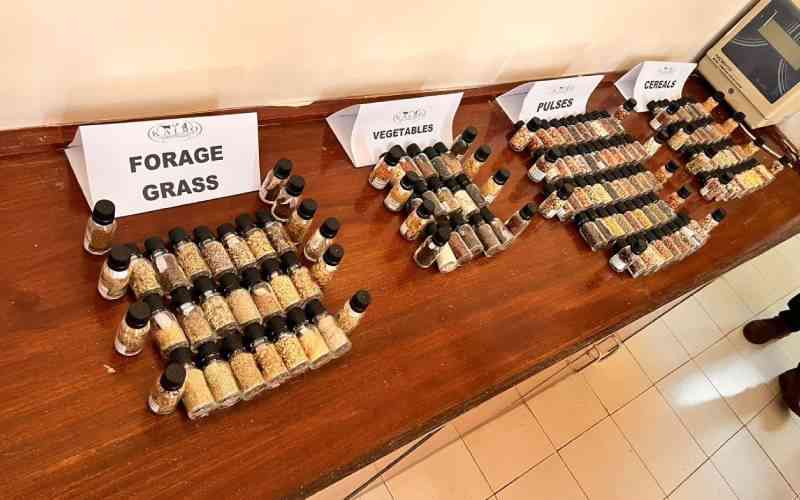
Gene banks conserve seeds and other plant genetic material under controlled conditions, allowing researchers and breeders to access traits needed to develop crops that can tolerate drought, resist pests and diseases, and cope with rising temperatures.

In a region increasingly exposed to climate shocks, the report describes these collections as strategic assets for long-term food security.
According to FAO, Africa currently holds about 220,000 seed samples from nearly 4,000 plant species in 56 gene banks across the continent.
However, only around 10 per cent of these collections are safely duplicated in other locations, leaving them vulnerable to risks such as flooding, power outages, conflict and chronic underinvestment.
“This is a risky situation. Plant genetic resources are the foundation of sustainable agri-food systems, and gene banks are essential to ensuring those resources are not lost forever,” said Chikelu Mba, FAO’s Deputy Director of the Plant Production and Protection Division. “
She notes that the decline of crop wild relatives and farmers’ traditional varieties has increased the importance of gene banks.
“These plants contain genetic traits vital for future crop improvement, yet many are being lost due to habitat destruction, land-use change and climate stress,” she said.
Gene banks, the report says, offer a secure backup while conservation and restoration efforts struggle to keep pace.
In Kenya, we have the Genetic Resources Research Institute (GeRRI), which has over 50,000 accessions belonging to 1,800 crop species of mainly landraces, improved cultivars and their wild relatives acquired through donations and field collection from various parts of Kenya.
“So far, 23,000 accessions have been characterised to determine their diversity and variability. Characterisation data plays a critical role in understanding the value of our germplasm and facilitates its access and utilisation,” said Desterio Nyamongo, the director at GeRRI.
Beyond preservation, he said, gene banks play a key role in crop breeding.
Stay informed. Subscribe to our newsletter
According to the report, 21 African countries are actively developing improved varieties of 81 crop species, including underutilised and indigenous crops such as African eggplant, amaranth and moringa, many of which depend on access to conserved genetic material.
Nyabongo noted that despite their importance, many African gene banks face persistent challenges, including limited funding, shortages of skilled personnel, ageing infrastructure and weak data systems as major constraints.
In some facilities, unreliable electricity and inadequate storage equipment threaten the long-term viability of seed collections.
“Africa’s ability to adapt its agriculture to climate change depends on how well it conserves and uses its genetic resources. Gene banks are a cornerstone of that effort. Still, they require sustained political and financial commitment,” said Eliane Ubalijoro, Chief Executive Officer of the Centre for International Forestry Research and World Agroforestry.
The report urges governments to integrate gene banks more firmly into national food security and climate policies, while strengthening regional cooperation to share expertise and reduce costs.
It also calls for greater investment in safety duplication, improved documentation, and modern storage technologies to reduce the risk of irreversible loss.
“Support for farmers and community seed systems is equally important. Traditional knowledge complements formal conservation and helps keep crop diversity in active use,” he said.
According to FAO, the cost of strengthening gene banks is modest compared to the long-term consequences of losing genetic resources needed to feed future generations.
With climate uncertainty growing, the report urges that investing in gene banks is no longer optional but essential to safeguarding Africa’s food future.