



Audio By Vocalize

Kenya is set to begin crude oil exports from the South Lokichar basin by the end of the year, with the government assuring Parliament that transport and regulatory systems are being put in place to support the evacuation plan.
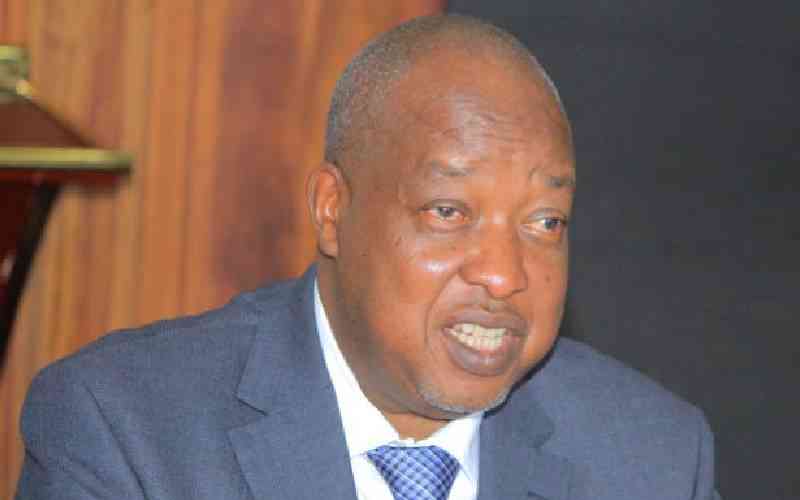
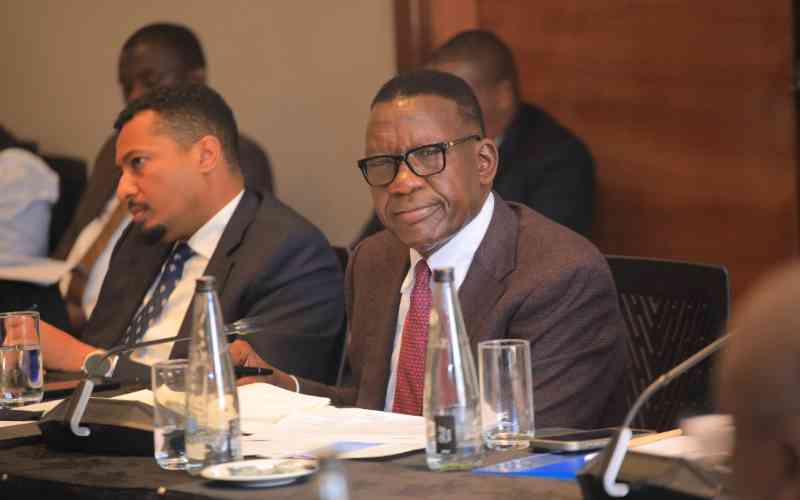
Transport Cabinet Secretary Davies Chirchir told a joint sitting of the Senate and National Assembly Energy Committees in Nairobi that infrastructure is ready to facilitate crude oil movement from Turkana to the Coast.
Chirchir said Lokichar is already connected to the national trunk road network, with the main corridor to Mombasa undergoing major strengthening and expansion works.
“Within Turkana and the broader north-western corridor, the Government has already delivered critical road links and key bridge structures that enable safe, all-weather movement ensuring that oilfield logistics can connect reliably to the wider corridor network,” said Chirchir.
He added that the principal national trunk route linking the Rift Valley to Nairobi and onward to Mombasa is being upgraded to boost capacity and safety.
“The principal national trunk route linking the Rift Valley to Nairobi and onward to Mombasa is being upgraded through major capacity and safety interventions—ensuring that once crude reaches the trunk network, it can move efficiently to the Coast and into the Port system,” he said.
Road evacuation options
Chirchir outlined two road evacuation routes that could be implemented either independently or jointly, depending on operational needs and traffic management requirements.
The first option is the Lokichar–Barpelo/Marich Pass/Baringo–Nakuru–Nairobi–Mombasa route.
“This option is strong since it offers a lower-traffic corridor over long stretches, which is operationally advantageous for petroleum haulage, it provides route diversity, reducing dependence on the busiest sections of the Northern Corridor and it allows better planning for convoying, incident response, and predictable travel times,” said Chirchir.
The second route is the Lokichar–Kitale–Eldoret–Nakuru/Nairobi–Mombasa corridor.
He said this option benefits from Eldoret’s established logistics ecosystem.
“This option is strong since it benefits from an established logistics ecosystem in Eldoret, including services, supply chains, and emergency response capacity and provides high operational convenience for fleet management, fuel supply, repairs, and staging while connecting well to major corridor operations and supports logistics scaling as evacuation volumes increase,” he said.
Chirchir noted that large-scale trucking is expected to begin next year as a temporary solution, pending transition to a road-rail hybrid system by 2030.
Hybrid road-rail plan
Stay informed. Subscribe to our newsletter
In Phase Two, beyond 2030, Kenya plans to rely on a hybrid road-rail solution. During the production period of approximately 20,000 barrels per day, oil will be transported by road tankers from Lokichar to the Eldoret railhead before being moved by train to Mombasa.
“The evacuation plan is operationally sound, combining road and rail modes to cover ~1200 km from Turkana to Mombasa, the first leg (Lokichar to Eldoret, ~300 km) will use road tankers to a facility at Eldoret ICD, which will be upgraded as a rail loading point, the second leg (Eldoret to Mombasa, 908 Kms via MGR) will move crude by train to the Changamwe KPRL terminal near Mombasa port,” said Chirchir.
He said moving oil solely by road would require approximately 600 trucks daily to transport 20,000 barrels per day, but integrating rail will significantly reduce congestion and improve efficiency.
Environmental and safety safeguards
Environment Cabinet Secretary Deborah Barasa assured Parliament that public health and safety risks along the export corridor would be addressed through a preventive, regulatory and collaborative enforcement framework anchored in the Constitution.
She said her ministry would provide policy leadership and oversight to ensure environmental protection, climate resilience and public health safeguards are integrated into oil development.
“It is important to note the crude-oil pipeline is the ideal, safe and preferred means of transporting the produced crude oil from Lokichar to the point of export, the road or rail transport that Gulf Energy has proposed in the PDP is yet to be scrutinized through an ESIA process to ensure the appropriate safeguard conditions are instituted to guarantee public health and safety,” said Barasa.