

The High Court has declined to release police officer Klinzy Baraza, who is charged with the killing of mask vendor Boniface Kariuki during demonstrations, on bail pending his murder trial.
Justice Margaret Muigai of the Milimani Criminal Division on Monday, February 9, rejected Baraza’s application, citing the risk of witness interference, safety of the victim’s family, the seriousness of the offence and the potential erosion of public confidence in the justice system.
“The court finds the reasons advanced by the DPP on the possibility of interference with witnesses, protection and safety of victims and maintenance of public order, peace and security to be compelling,” Justice Muigai ruled.
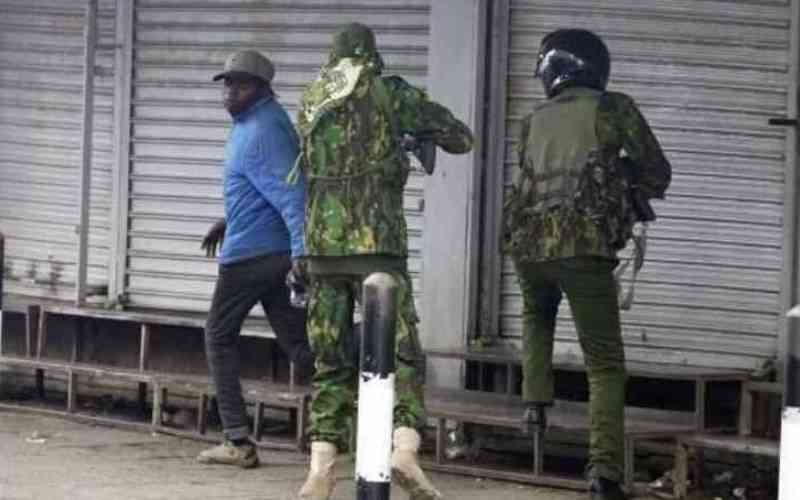
Baraza is charged with the murder of mask hawker Boniface Kariuki during public demonstrations on June 17, 2025, along Moi Avenue in Nairobi’s Central Business District.
He filed an application seeking bail, arguing that he was ready, able and willing to comply with any bond terms set by the court.
“I will not abscond and will attend all proceedings whenever and wherever required,” Baraza told the court.
He also stated that he has a fixed place of abode in Nairobi’s Kayole area.
However, the Director of Public Prosecutions opposed his release, citing the seriousness of the offence, the compelling evidence disclosed ahead of the hearing and the possibility of a life sentence. The prosecution argued that Baraza was a flight risk who could abscond.
The prosecution also filed an affidavit stating that key witnesses include police officers junior to the accused and civilian witnesses who have expressed fear for their safety.
The DPP further contended that as a trained police officer, the accused is conversant with investigative procedures and networks that could enable him to evade detection or interfere with evidence.
An affidavit by the investigating officer disclosed that some witnesses are police colleagues, while several civilians have expressed fear for their lives, adding that the accused retains knowledge and access that could be used to trace or intimidate witnesses.
The Independent Policing Oversight Authority also filed an affidavit opposing bail, stating that investigations indicated law enforcement officers had accosted an innocent bystander, the deceased, and that the accused’s authority and influence created a real and substantial risk of interference with key witnesses.
While opposing bail, the prosecution further submitted that the deceased’s family had suffered irreparable loss and strongly opposed the accused’s release.
The court heard that the Office of the Director of Public Prosecutions has written to the witness protection agency seeking safeguarding for two witnesses.
“For now, bail and bond are denied to protect the victim’s family members and crucial vulnerable witnesses who, according to ODPP and IPOA reports, fear harm and possible interference,” Justice Muigai ruled.
Stay informed. Subscribe to our newsletter
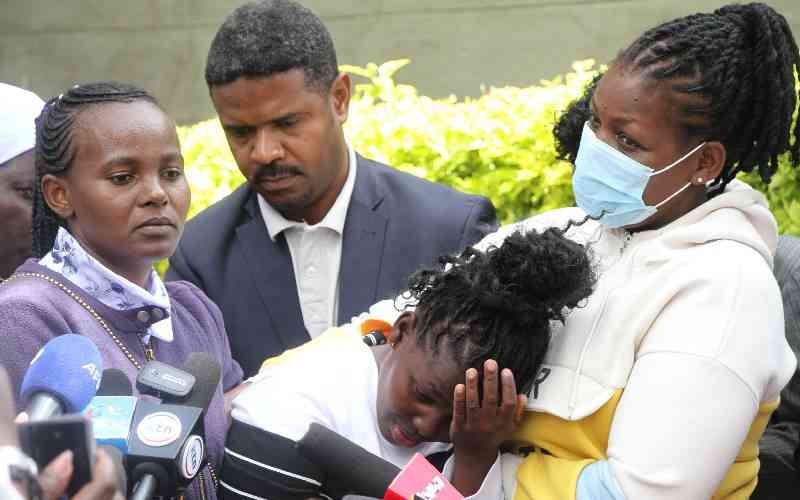
The court also considered the impact of the incident on the deceased’s family, noting that a probation report indicated the death of their eldest and only son had caused far-reaching psychological, social and economic hardship.
“Their son was not only gaining independence, but was also helping his parents raise other children in the family,” the court was told.
According to a victim’s report presented in court, the family has faced intimidation since the incident.
“The family of the deceased have had their phones jammed with calls and SMS messages castigating them, and they raised concerns over their safety and security and fear of victimisation,” the report states.
Justice Muigai noted that the family had received calls and messages from unknown individuals urging them to abandon the case, adding that their loss was still fresh, recent and painful and that they feared possible interference with witnesses and the hearing process.
https://www.youtube.com/watch?v=iSukSpEMyq0
She observed that the fatal shooting occurred in a public setting during demonstrations and attracted widespread public outrage, warning that releasing the applicant at this stage could erode public confidence in the criminal justice system.
The judge added that Baraza’s training and access as a police officer heightened the risk of interference.
“The applicant is well-trained and conversant with investigative procedures, police networks and knowledge that could enable him to evade detection. He may interfere with witnesses and tamper with evidence,” she said.
Justice Muigai emphasised public interest and security concerns.
“The premature release of the applicant would undermine legitimate expectations of justice. The stakes are high. These circumstances cannot be ignored or swept under the carpet,” she ruled.
However, she said the officer may renew his application for bail after key witnesses testify.
The judge also directed the trial court to consider expediting the hearing by prioritising testimony from key witnesses.
The matter will be mentioned on February 17, 2026, to fix hearing dates.